| Task: Capture PLE Use Cases |
 |
 |
|
| Roles | Primary Performer: | Additional Performers: |
|---|
The main focus of this task is to describe for each of the roles their key PLE use cases. This is critical for mapping the use cases to the PLE solution. PLE use cases include:
We prepare for the PLE use cases by defining strategically reusable items for the business. A critical element of PLE adoption is to identify the size and shape of the reusable item for the product line. We will refer to the reusable item as a “component”.
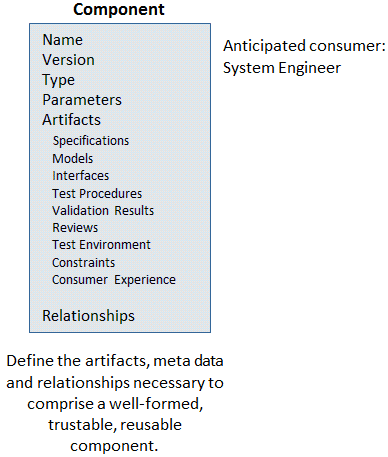
Before defining each of these use cases it is important to define the intended consumer, and artifacts, links, and meta-data needed for the component to be reused effectively. There needs to be sufficient supporting material such as validation tests, opinions from other consumers and programs, defect logs and so forth, to build the trust necessary for the component to be reused. A sample component structure definition is illustrated below. This is important to PLE adoption because the product line engineering activities will benefit by reusing components both within products and across products.
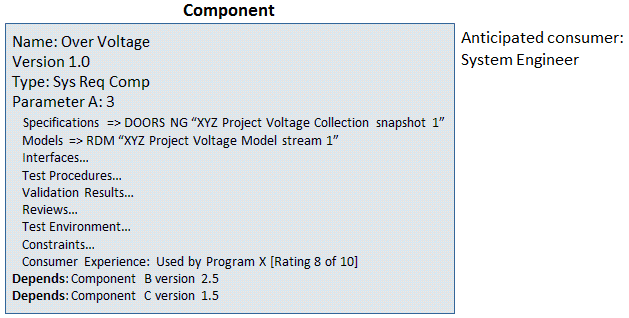
In the image below is a sample component based on the structure defined above. While not all items in the component are illustrated, it is important to note the kind of information needed for reusable components; namely, the location of and version (or baseline) of the artifacts for the component. This sample component below has a type declared, in this case it is a “System Requirement Component”, and as such it has requirements, and models, and interfaces and related tests but no code. Again, this is just a sample, but this is what is meant by the size and shape of the components; define their kind or type and the artifacts, meta data, and relationships which comprise them. The other key item to address at this time is to make component versioning decisions. The version of a component is managed above and separate from the version of the artifacts in the component.
Refine as needed each of the use cases below. Search/Evaluate Component Pre-conditions:
Roles: Product Line Manager, System Engineering Lead, System Engineer Flow:
Post-conditions:
Reuse Component Pre-conditions:
Roles: System Engineer Flow:
Post-conditions:
Provide Component Feedback Pre-conditions: Roles: Any Flow:
Post-conditions: Publish/Update Component Pre-conditions:
Roles: System Engineer Flow:
Post-conditions:
Approve Component Pre-conditions:
Roles: Product Line Manager, System Engineering Lead, Subject Matter Experts Flow:
Post-conditions:
|
© Copyright IBM Corp. 1987, 2016. All Rights Reserved. |